Pearl Street Energy Centre: Heating Toronto Without Burning Fuel
An in-depth look at how Enwave's innovative district energy system is transforming downtown Toronto's heating infrastructure.
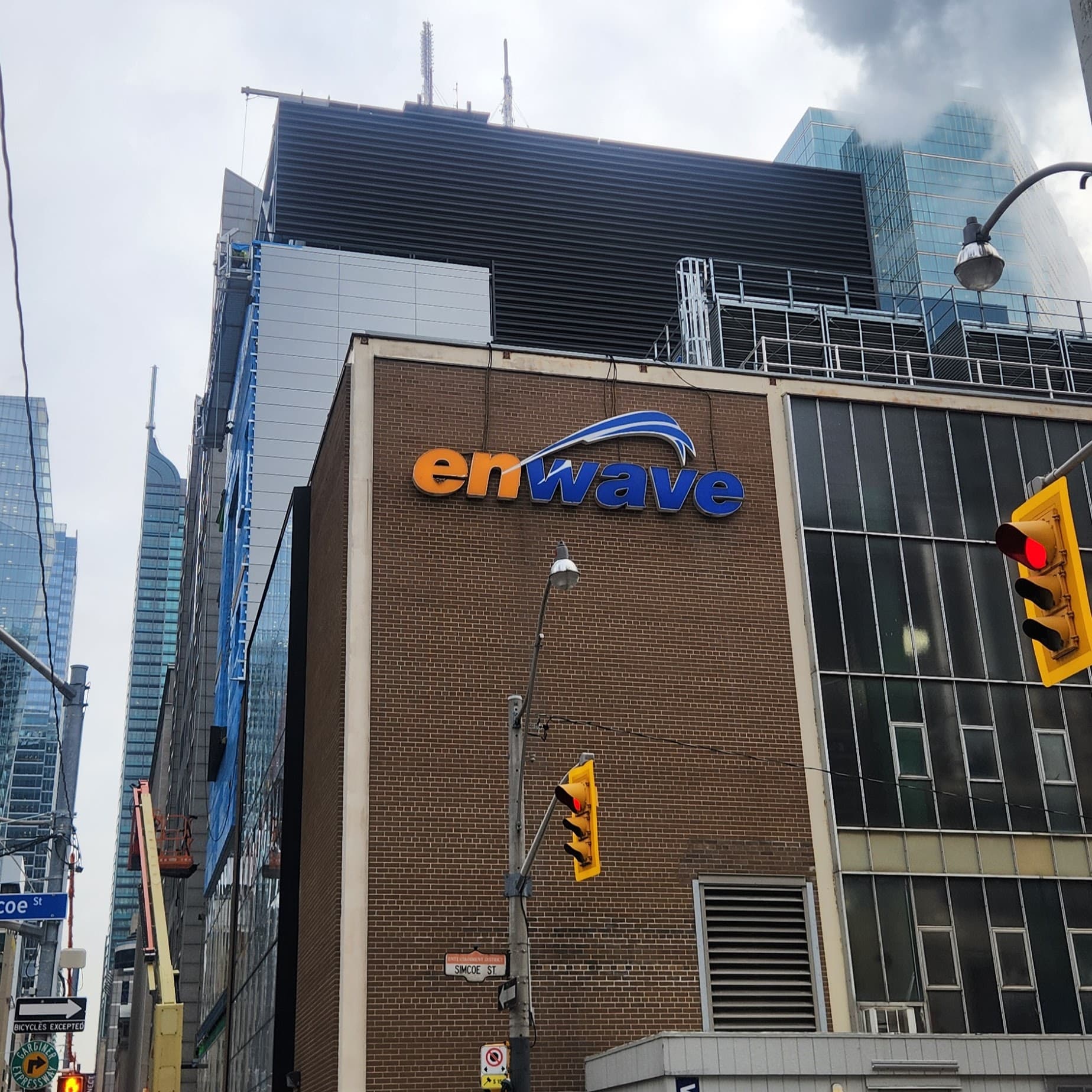
Toronto's downtown core is heating up — but not in the way you might think. Enwave's Pearl Street Energy Centre (PSEC) is leading a fundamental shift in how cities provide thermal energy, not by burning more fuel, but by recovering what's already there. This isn't just a facility upgrade. It's a full-blown shift in how energy is sourced, distributed, and reused — and it's happening right in the middle of Canada's largest city.
PSEC is part of a broader decarbonization strategy to eliminate emissions from buildings, which make up over 50% of Toronto's GHG emissions (City of Toronto, 2024). Instead of expanding fossil-based infrastructure, the city is leveraging a cleaner solution: water-source heat pumps and waste heat recovery integrated into a district energy system already known for Deep Lake Water Cooling.
More Capacity, Lower Emissions
The new plant adds 62,000 MBH of heating and 3,600 tons of cooling capacity to Enwave's downtown district energy network. That's enough to serve 10 million ft² of additional building space with low-carbon thermal energy.
Unlike traditional boilers, which combust natural gas to generate heat, PSEC's heat pumps pull thermal energy from sources like customer return loops, Deep Lake Water Cooling discharge, and even engine exhaust. That means one unit of electricity used by the system can deliver multiple units of heating or cooling — all without on-site combustion.
Dual Function: Heat Reclaim Chillers
At the heart of PSEC are heat reclaim chillers — a specialized type of water-source heat pump. These units don't just cool water; they also extract heat during that process and repurpose it to heat buildings. This dual-use capability eliminates waste and turns what would've been thermal losses into a revenue-generating, carbon-reducing heat stream.
The system operates across a thermal band from 44°F to 140°F, upgrading low-grade heat (e.g., 52°F customer return water) to temperatures suitable for space heating — all while also delivering useful cooling. That's real efficiency.
And the numbers hold up: when commissioned, the system is expected to cut 11,600 tonnes of CO₂e annually — equivalent to converting every square foot of that 10 million ft² to net-zero heating.
Real Estate Constraints, Real Engineering Solutions
There was a catch — no room to expand. The Pearl Street site had buried fuel tanks, zero spare indoor space, and had to keep operating 24/7. The solution? Engineers designed a new three-story structure that cantilevers over existing assets while complying with Ontario Building Code and TSSA requirements.
They even implemented a false loading system to stage the new heat pumps without disrupting sensitive loads like downtown data centers. That level of systems coordination, down to the thermal inertia planning, is what separates good MEP from great MEP.
Broader Impact and Integration
PSEC is fully integrated with Enwave's 40 km underground distribution loop, which already provides chilled water and steam to 160+ buildings. The project received $600M in financing support from the Canada Infrastructure Bank and was recognized with an Ontario Engineering Project Award.
It's also aligned with Toronto's TransformTO Net Zero Strategy, aiming to decarbonize citywide building operations by 2040.
What's Next?
Enwave's roadmap includes expanded deep lake water cooling, GeoCommunities leveraging ground-source loops, and further deployment of high-capacity thermal batteries. PSEC isn't the end — it's the beginning of a distributed, resilient, and low-carbon urban energy network.
Got thoughts?
How should we scale district energy to suburbs and campuses? Should public policy mandate building interconnection? Send me your questions through the contact page, challenges, or ideas in the comments — let's keep this conversation going.
References
- Enwave Energy Corporation. (2024). Pearl Street Energy Centre Project Overview. https://www.enwave.com
- City of Toronto. (2023). TransformTO Net Zero Strategy. https://www.toronto.ca
- HH Angus. (2025). Enwave Pearl Street Energy Centre OEPA Award. https://hhangus.com
- Urban Land Institute. (2024). Deep Lake Water Cooling System Profile. https://urbanland.uli.org
Related Articles
Exploring how advanced heat pump systems are revolutionizing district energy networks and enabling low-carbon heating and cooling solutions.
Strategic approaches to implementing thermal storage solutions that enhance system efficiency and reduce operational costs during peak demand periods.