The Future of Heat Pump Technology in District Energy
Exploring how advanced heat pump systems are revolutionizing district energy networks and enabling low-carbon heating and cooling solutions.
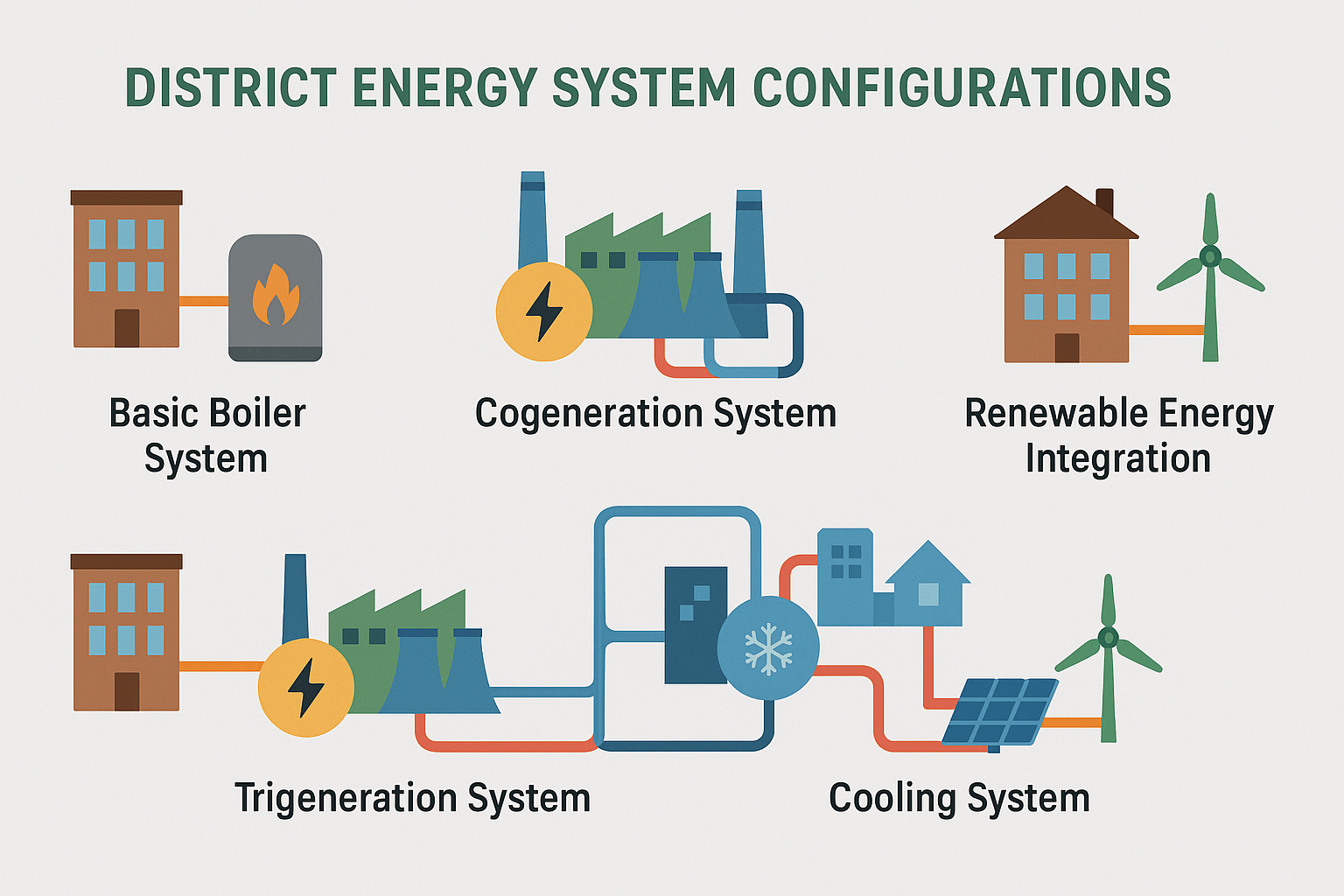
The Future of Heat Pump Technology in District Energy: Revolutionizing Low-Carbon Heating and Cooling
We're living through the structural shift of the century—energy systems are no longer just about supply and demand. They're about carbon, resilience, and control. And in that equation, district energy networks integrated with heat pump technology are becoming a cornerstone of future-ready cities.
This isn't theoretical. Cities like Stockholm, Helsinki, and Toronto are showing that large-scale electrified heating is viable—even in cold climates. But we need to stop treating heat pumps as an HVAC footnote and start designing with them at the core.
Why District Energy and Heat Pumps Make Sense Together
District energy isn't new. But the way we think about it needs to be. A fifth-generation district energy system distributes water at near-ambient temperatures—unsexy, maybe, but perfect for leveraging decentralized heat pumps in buildings. These systems don't just provide heat—they move it, store it, and share it across loads and timescales.
At the center of this is the heat pump: a device that doesn't burn anything, just shifts heat using electricity and refrigerant cycles. Combine that with thermal storage and low-temperature loops, and suddenly you've got a system that doesn't care what time the sun shines or when the wind blows.
Example? The Pearl Street Energy Centre in Toronto integrates water-source heat pumps that reclaim waste heat and electrify heating across a network of buildings. It cuts 11,600 tonnes of CO₂ per year. That's not a prototype—that's in operation.
Decentralized, Hybrid, and Modular: The New Heat Pump Stack
The idea that there's one best configuration is outdated. Centralized heat pumps are useful, yes, but we're seeing a shift toward building-level booster heat pumps that adapt based on local loads. This fits naturally with 5GDHC networks that operate closer to ground temperatures.
Hybrid systems also matter. A gas boiler might still provide peak shaving or redundancy—but the base load? That's where the heat pump shines, especially when it's powered by cheap off-peak renewables and integrated with thermal storage.
And the modularity? That's key. Want to expand your network? Just add another heat pump, or even better, another building with one already installed. You can grow these systems like a neural network.
Challenges That Still Need Engineering Solutions
Let's not sugarcoat it. This isn't plug-and-play.
- Capital cost is still a barrier, especially for retrofits. But over time, OPEX drops dramatically with electrification.
- Temperature lift limits still apply—most heat pumps struggle beyond 70°C. High-temp models are emerging but they're not widespread.
- Grid stress is real. Large-scale adoption means we'll need to reinforce electrical infrastructure and flatten peak demand curves.
- Refrigerants are improving, but many current systems still use high-GWP fluids. Natural alternatives like ammonia and CO₂ are making a comeback—because, ironically, they were here first.
The Bigger Picture: Where Cities Are Headed
Urban sustainability isn't just about installing solar panels. It's about building systems that use local energy flows efficiently—sewage heat, lake water, data center waste heat. Heat pumps make that usable.
- Stockholm uses heat pumps to recover heat from wastewater and data centers.
- Vancouver is expanding heat pump use for sewage energy recovery.
- Berlin, Cologne, and Vienna are scaling large river- and geothermal-driven systems.
- Heerlen, Netherlands, runs a fifth-gen minewater network with reversible building-level heat pumps and bidirectional flow.
Each case is different. The common thread? Modular electrification. Thermal networking. Smart control.
Looking Ahead: This Is an Infrastructure Play
This is where it gets interesting. Innovations aren't just in hardware—they're in control logic, AI-driven demand prediction, smart metering, and dynamic pricing integration. Heat pumps are becoming nodes in intelligent thermal networks.
High-temperature models are pushing boundaries. Refrigerants are getting cleaner. Integration with renewables is improving. We're entering a phase where district energy becomes the operating system, and heat pumps are just the compute modules.
Conclusion
We're moving past the old dichotomy of "boilers vs. heat pumps." That's the wrong conversation. The real question is: how do we design urban thermal systems that are modular, clean, and resilient?
Integrated heat pump district energy systems are how we get there. And they're not on the horizon—they're already online.
Related Articles
Strategic approaches to implementing thermal storage solutions that enhance system efficiency and reduce operational costs during peak demand periods.
Exploring cutting-edge energy modeling methodologies that improve accuracy and enable better decision-making for large-scale infrastructure projects.