Navigating Canada's Carbon Reduction Policies: A Guide for Facility Managers
A comprehensive overview of current and upcoming carbon reduction policies and how facility managers can prepare their infrastructure for compliance.
How Facility Managers Can Own the Carbon Transition in Canada
Net-zero by 2050 isn't just a national goal. It's a realignment of how commercial and industrial facilities across Canada will operate—electrified systems, new cost structures, policy layers at every jurisdictional level, and accountability built into the architecture of building operations. Facility managers? You're in the driver's seat.
A Shift in Carbon Policy: What's Actually Happening?
Canada's federal commitment to net-zero emissions by 2050 is locked into law through the Canadian Net-Zero Emissions Accountability Act. But here's where it gets real: the Clean Electricity Regulations (CER), finalized in December 2024, aim to decarbonize the grid by 2050—not 2035, as initially proposed. Why the delay? Pushback on grid reliability and cost feasibility, particularly from provinces like Alberta, forced Ottawa to bake in more flexibility.
What does this mean? If your facility uses fossil-fueled equipment >25 MW and connects to a grid adhering to North American Electric Reliability Corporation (NERC) standards, you're going to have compliance thresholds to meet. But the CER allows operators to buy offset credits or claim exemptions for remote/small units—so you can comply without gutting your infrastructure all at once. That's intentional. Ottawa knows each province is a different animal.
Provincial Frontlines: Nova Scotia and Halifax Lead the Charge
Nova Scotia's climate law targets a 53% reduction from 2005 emissions levels by 2030, and net-zero by 2050. For large emitters, the Output-Based Pricing System (OBPS) kicks in at 50,000 tCO₂e/year—optional for facilities down to 10,000 tCO₂e. Exceed the emissions intensity benchmark? Pay up: buy credits, tap into the Climate Change Fund, or trade with cleaner peers. The kicker? The price is rising—CAD 170/tonne by 2030.
Municipal ambitions go further. Halifax wants 75% fewer emissions by 2030 (compared to 2016) and zero-carbon new buildings by that same year. But there's friction. The province postponed adopting the 2020 National Building Codes. It's a delay that could kneecap Halifax's plans. Facility managers need to watch this gap—it affects futureproofing strategies for both retrofits and new builds.
At the same time, Nova Scotia is phasing out coal and targeting 80% renewable power by 2030. For facilities there, electrification isn't just an environmental play—it's becoming the cheaper move. Ground-source heat pumps in Halifax are already among the most cost-effective in the country.
So, What Should Facility Managers Actually Do?
Step 1: Understand What's Driving Costs
Carbon pricing is no longer about fuel bills. The real cost structure is emerging in the form of OBPS systems and performance benchmarks. Operating over your emission intensity? You're either surrendering credits or writing cheques.
And with the federal consumer carbon tax repealed (as of April 1, 2025), industrial emitters remain the primary target. Don't misread the tax repeal—it doesn't make emissions free; it just shifts the policy emphasis entirely onto large-scale facilities.
Step 2: Audit and Benchmark Like It's Q1
If you don't already have ENERGY STAR Portfolio Manager data for your facility, you're flying blind. Get a baseline. Know what systems are driving your load profile. HVAC, lighting, plug loads—don't underestimate any of it.
Step 3: Electrify What Makes Economic Sense
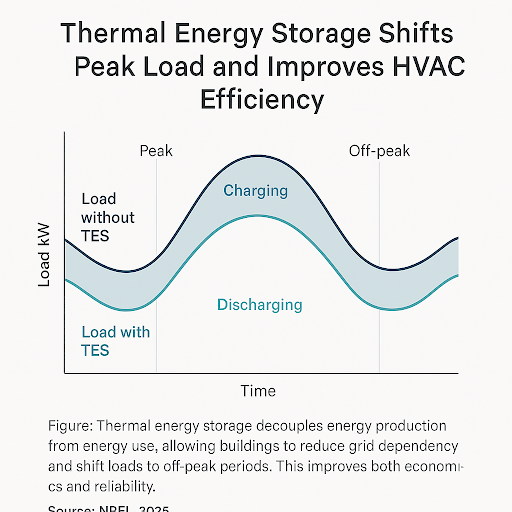
Start where rebates meet ROI. Air-source heat pumps? Great in mild shoulder seasons. Ground-source systems? A strong contender in Nova Scotia. Thermal Energy Storage (TES)? A game-changer for load shifting and peak shaving—especially if your utility bills have big demand charges.
Step 4: Use the Funding While It Exists
Federal and provincial programs are throwing money at this transition:
- Green Industrial Facilities and Manufacturing Program (GIFMP): Up to 50% of eligible costs, sometimes 100% for Indigenous or non-profits.
- Low Carbon Economy Fund (LCEF): Big on fuel-switching, electrification, and energy efficiency retrofits.
- Efficiency Nova Scotia: Targeted rebates, up to 75% cost coverage on selected equipment. They even offer free recommissioning assessments under their Building Optimization Program.
Use these programs now—eligibility windows close fast, and future funding is not guaranteed.
Aligning with the Grid: How to Electrify Intelligently
With Canada's grid moving toward net-zero by 2050, the grid you connect to in 2035 will be very different than today's. That means:
- Electrifying with efficient systems = lower operational carbon.
- TES = load shifting = grid resilience = cheaper power.
- On-site generation (solar + storage) = peak avoidance = better ROI.
But electrification isn't a plug-and-play strategy. You'll need panel upgrades, load analysis, and possibly sub-metering. It's capital intensive up front, but decarbonization is where the savings are heading.
Real Talk: It's Time for Facility Managers to Get Strategic
Carbon compliance isn't just a regulatory checkbox. It's a strategic decision with financial upside.
- ✅ ROI-Driven Investments: Ground-source heat pumps, TES, LED retrofits—all offer measurable payback when energy and carbon are factored in.
- ✅ Risk Mitigation: Carbon pricing is increasing. Penalties for non-compliance will follow. Delaying action increases exposure.
- ✅ Asset Value Uplift: Low-emission buildings are attracting better lease rates and longer tenancies. It's becoming a landlord differentiator.
The message? Don't wait for the policy hammer to drop. Beat the curve.
Final Thoughts (But Not the End)
Carbon policy in Canada is becoming a performance driver—just like safety or uptime. And like those pillars, it demands a system-level response. Facility managers who understand this, who take early action, and who align operations with the evolving grid will lead—not follow.
Related Articles
Practical approaches to transitioning existing commercial buildings from fossil fuel-based systems to electric alternatives while minimizing disruption.
Exploring how advanced heat pump systems are revolutionizing district energy networks and enabling low-carbon heating and cooling solutions.